
More Than a Forgotten Name: Understanding Alzheimer's Disease
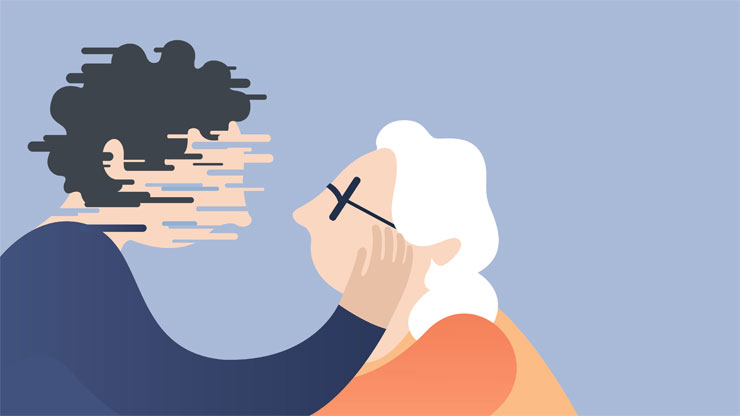
What happens when cherished moments, familiar faces, and everyday life gradually become harder to recognize and remember?
With September being Alzheimer's Awareness month, we thought it would be important to bring to light the suffering and hardship that people with the disease face every day, and help educate individuals even further on how Alzheimer's affects people's lives and what we, as a community, can do to help them.
Alzheimer's disease affects approximately 1 in 9 senior citizens worldwide, meaning almost 38 million people suffer from this condition (source a), that does not only affect memory retention, but also cognitive ability, in many cases eventually becoming serious enough to interfere with daily life. Furthermore there is no complete cure for this disease, which makes supporting and empathising with them as they go through this adversity incredibly important . Understanding this disease and its effect on individuals can help spread awareness and increase the support they ought to receive.
Alzheimer's is considered to be the most common cause of dementia (the general term for memory loss and loss of other cognitive abilities that can affect daily life) and is considered more a type of dementia, accounting for nearly 80 percent of dementia cases worldwide (source b). It is not a normal part of aging and it is a progressive brain disease, which means dementia symptoms gradually get more severe over a time. During its earlier stages, memory loss is only mild and cognitive abilities are not affected, so symptoms may look like; having difficulty remembering names, losing valuables, experiencing trouble with organising or planning. However at later stages, the memory loss becomes very apparent, where family members and friends are forgotten, the ability to carry on a conversation is lost, and cognitive abilities begin to seriously deteriorate.
People with Alzheimer's unfortunately face difficulty just going about their daily life. The forgetfulness becomes frustrating, and the memories begin fading. They lose their loved ones while living under the same roof. They eventually feel like spectators of their past life; seeing everything yet recalling nothing. Memories and experiences make a person who they are, and for the people inflicted with this condition, these moments vanish, and they can lose their sense of self. This is painful not only for the person, but also the people around them. It is important to understand the hardship faced by the caregivers of these people, who many a time are their own family members. The heartbreak one goes through as they are forced to watch a person they have known for years look at them as though they are strangers.
Alzheimer's patients often act in unpredictable ways, experience distressing emotions such as confusion, wandering, aggression, and anxiety due to unmet needs they cannot even articulate. It is vital to remember that these are people, with feelings, and it is crucial that others understand the importance of patience, empathy, and support, for them and their families.
Awareness and understanding also matters because unfortunately, in some cases, those with illnesses who cannot properly verbalize their needs and their emotions are mistreated by the very people that are caring for them. Alzheimer's patients forget events and actions very easily, making it easy for them to undergo abuse and be forced to experience even more suffering than they are already subjected to. A large percentage of people with this condition experience some form of abuse or neglect by caregivers, however the statistics are still hard to exact due to severe underreporting of such cases.
In today's world, modern day medicine is improving all the time, and now there are preventative treatments for Alzheimer's for those who may be genetically predisposed to the condition, and there are also treatments that can help reduce the effect it has on people that already have been diagnosed with it. It is important to seek medical advice if you think you may be experiencing symptoms such as persistent changes in memory retention or thinking. Early assessment and/or diagnosis can help people access support and plan for the future. Furthermore, there are many charitable organizations and fundraisers held for Alzheimer's patients which helps fund research and treatment for them. Some practical actions you can also take are simply treating affected people you may meet in the future with respect and understanding, and also sharing reliable information about the condition. It is also important to be aware of the affected people around you so you can identify when someone may be experiencing abuse, and report it so that in the future such cases of unforgivable treatment are reduced.
As we are a literary club, we have curated a small list of books you may be interested in if you wish to extend your knowledge of Alzheimer's beyond this article:
Still Alice, Lisa Genova
Somebody I Used to Know, Wendy Mitchell
Before I Forget, B. Smith and Dan Gatsby.
Some of these are in fact firsthand accounts of the authors' experiences dealing with Alzheimer's. These books are deeply moving and incredibly insightful, giving us a window into the lives of people with this condition, as well as helping us put ourselves in their shoes, and realize how difficult it is to walk.
Alzheimer's disease may gradually blur memories, but it should never diminish a person's dignity or worth. Raising awareness is about much more than understanding the malady; it is about replacing judgement with compassion, fear with knowledge, and isolation with support. By educating ourselves, supporting affected families, and encouraging further research, we can help build a better society.
"Though those with Alzheimer's might forget us, we as a society must remember them" Scott Kirschenbaum, Filmmaker: You're Looking at Me Like I Live Here and I Don't