
Beyond the Scattered Mind: Perspectives on ADHD

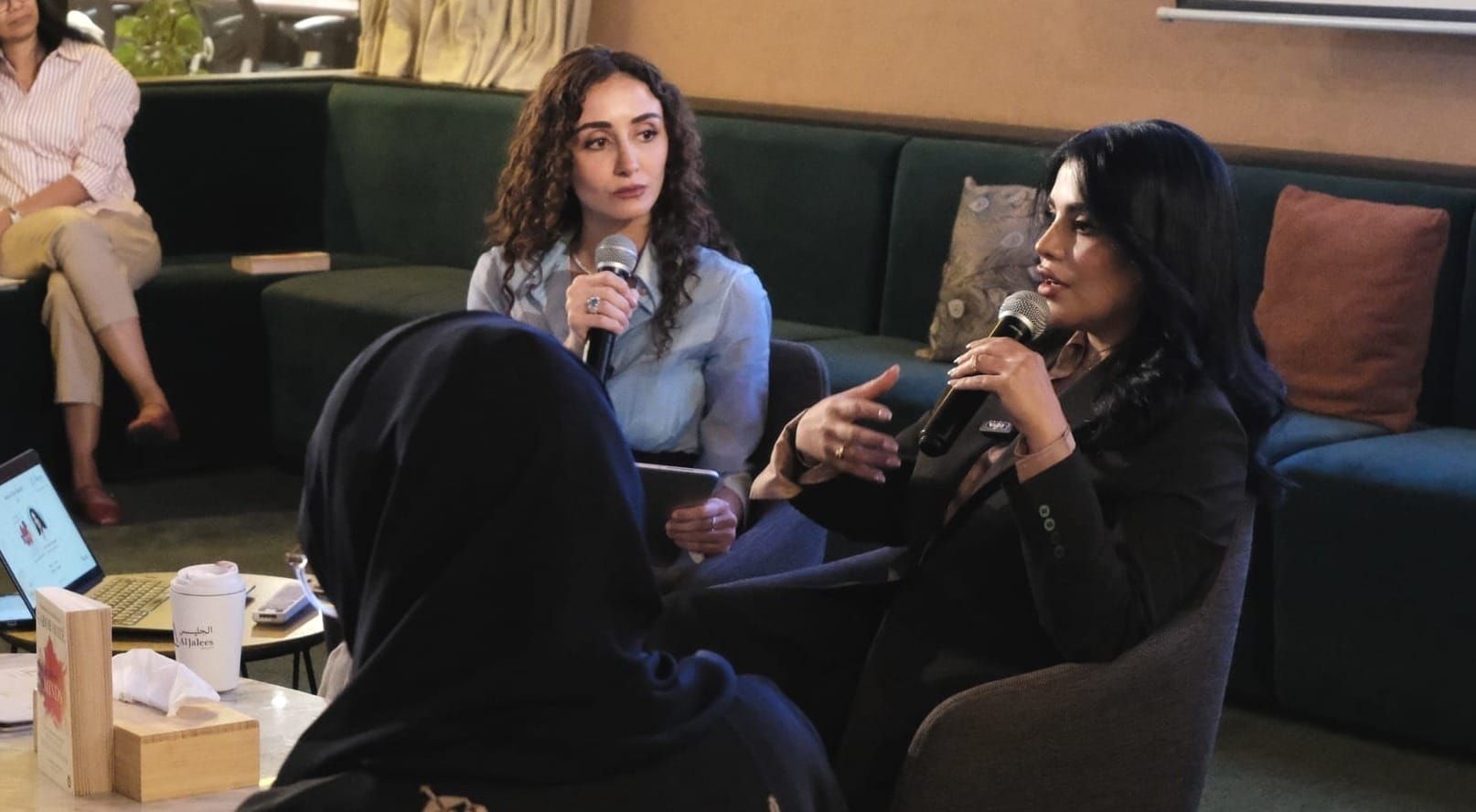
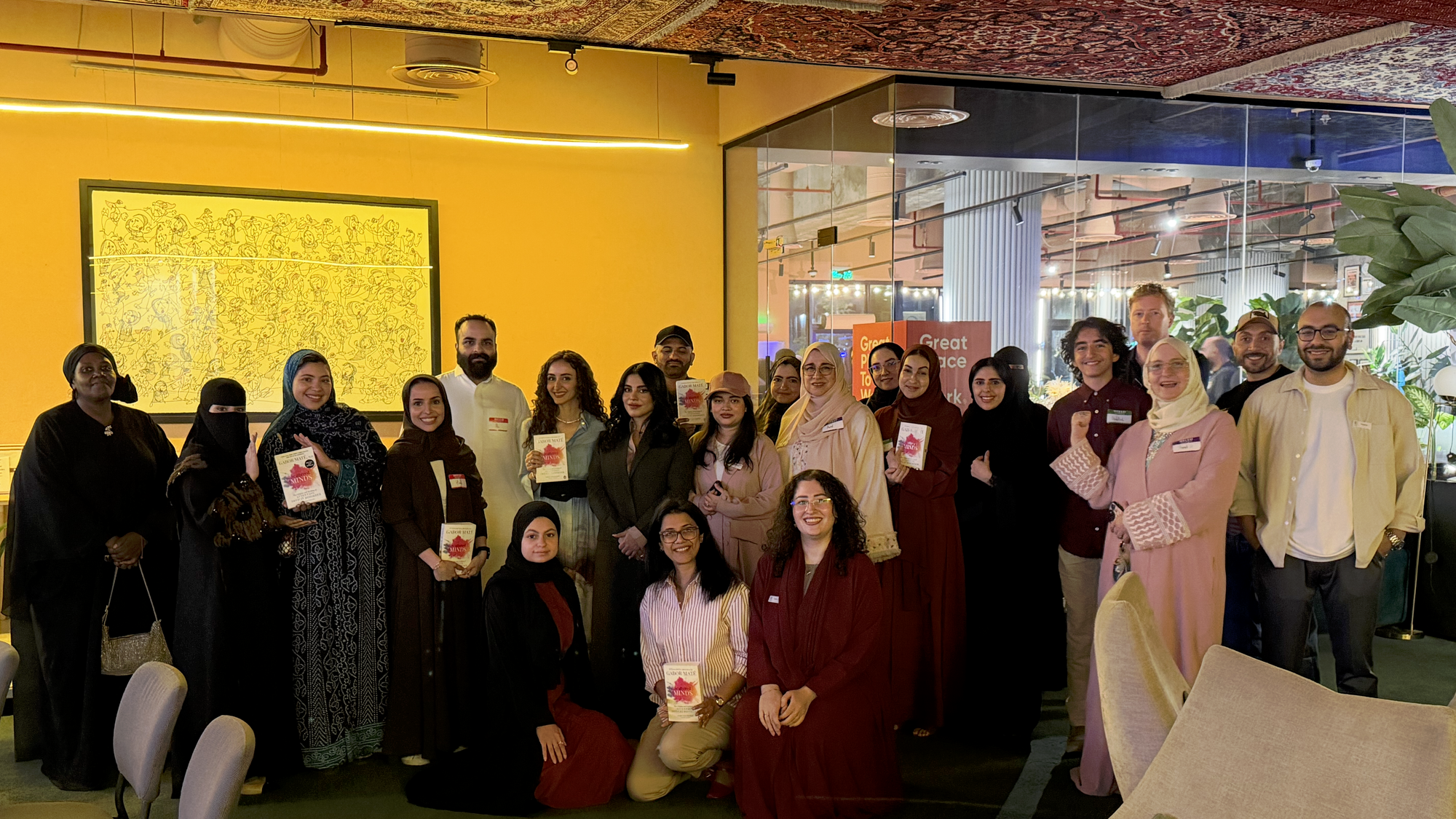
Our latest Literary Circle's evening brought a room full of readers, educators, parents, and clinicians to Al Jalees space at Huna in Riyadh. Gabor Maté's Scattered Minds became the starting point for a conversation that was, in equal measure, clinical and deeply personal. To anchor the discussion, Al Jalees welcomed Dr. Lujain Althaghafi, a consultant psychiatrist with over 15 years of experience in ADHD and child and adolescent psychiatry, trained across Saudi Arabia and Canada with two fellowships from Queen's University in Ontario, and currently practicing at Dr. Sulaiman Fakeeh Hospital and Waie Medical Centre in Riyadh.
The evening opened with an icebreaker that set the tone immediately: if your mind were a browser, how many tabs are open right now? The answers ranged from 1 to over 300, and the laughter that followed was the kind that comes from recognition rather than surprise. One attendee, Jamal, stepped forward early in the evening to share that he has ADHD and that he attended the event specifically because he is actively learning to manage it. His presence and story would prove to be one of the night’s most significant contributions.
What Mate got right, and what changed
Published in 1999, Scattered Minds is part memoir and part clinical argument, written by a physician living with ADHD. Maté argues that ADHD is shaped by early emotional experiences and caregiver-infant bonds. Dr. Lujain Althaghafi acknowledged the power of this framing while offering a clinical correction:
"Genetic research now identifies ADHD as one of psychiatry’s most heritable conditions, with a genetic contribution of 70 to 80 percent."
Dr. Al Thaghafi noted that Maté was ahead of his time in identifying the role of the orbital frontal cortex and recognizing emotional dysregulation and addiction links. However, she raised a concern regarding parental blame; modern evidence supports understanding over the guilt often generated by framing the parent-child relationship as the sole origin of ADHD.
"Scientifically, it is a neurodevelopmental disorder. The main driver is genetic, and environment is important, but it comes second, not first.”
She also pointed out that Maté was genuinely ahead of his time in several areas: he identified the role of the orbital frontal cortex in attention before studies confirmed it, he wrote about emotional dysregulation as part of ADHD long before it entered clinical conversation, and he documented the link between ADHD and addiction, noting that individuals with ADHD are more prone to substance use because their brains are constantly seeking the dopamine stimulation they are neurologically under-resourced to generate on their own. She raised a significant concern: that readers, particularly mothers, might feel blamed by the book's emphasis on the parent-child relationship as the root cause of ADHD. She clarified that this framing contradicts current clinical evidence and often generates guilt rather than the necessary understanding.
Three Types of ADHD and Why Girls Are Diagnosed Seven Years Later
One of the most illuminating parts of the evening came when Dr. Lujain Althaghafi walked the room through the three clinical subtypes of ADHD: the combined type, which involves hyperactivity, impulsivity, and inattention together; the hyperactive-impulsive type, where concentration is relatively intact; and the inattentive type, where there is no visible hyperactivity and no obvious behavioural disruption, but the child's mind is simply elsewhere. This third type, she explained, is significantly more common in girls, and because it presents no outward signs of distress, it goes unnoticed in classrooms and at home for years, which is precisely why girls receive their ADHD diagnosis an average of seven years later than boys do.
One of the evening's most illuminating segments came when Dr. Lujain Althaghafi outlined the three clinical subtypes of ADHD: the combined type (involving hyperactivity, impulsivity, and inattention); the hyperactive-impulsive type (where concentration remains relatively intact); and the inattentive type, characterized by a mind that is simply elsewhere, with no visible hyperactivity or behavioral disruption. Because this third subtype presents no outward signs of distress, it often goes unnoticed in classrooms and at home for years—which is precisely why girls, who are more frequently affected, receive their ADHD diagnosis an average of seven years later than boys.
"The child is sitting in class looking at the teacher, yet she is not there. The teacher will not notice, the school will not notice, and the family will not notice. They will think it is an IQ problem, or that she is lazy, and that is exactly why the diagnosis is missed for so long."
This resonated deeply with the audience, particularly women recognizing missed diagnoses in themselves or loved ones—providing long-sought answers to lifelong questions.
Dopamine, Diagnosis, and What Actually Helps
The conversation turned to practical interventions. Dr. Lujain Althaghafi explained that the instant rewards of video games can exacerbate dopamine dysregulation. Physical activity was highlighted as a reliable alternative that supports the dopamine system effectively.
Regarding over-diagnosis, Dr. Althaghafi emphasized the necessity of quality assessments. She warned that symptoms of anxiety or depression are often mislabeled as ADHD in brief consultations, whereas a proper diagnosis requires a comprehensive longitudinal clinical history.
"Proper assessment by a good physician who knows how to diagnose ADHD is the best protection against misdiagnosis, and there are doctors who will diagnose ADHD in five minutes, and I see this."
Voices from the Room: Jamal’s Story
The evening’s most moving moment occurred when Jamal shared his journey. After struggling through his initial university years with a poor GPA, he returned to Mohammed bin Salman University with an ADHD assessment that unlocked vital accommodations. Now a top student, Jamal explained that extra exam time and separate testing rooms transformed his academic performance. He also shared a unique practical insight: because missing a single point in a lecture can derail his entire understanding, he uses ChatGPT as a primary study tool to pause and ask clarifying questions without interrupting the class flow.
"There are solutions. We have to accept ourselves, give our children the proper support, and understand that ADHD is not the end of life, and it may even be one of the gifts, because people with ADHD excel in certain areas in ways others simply do not."
A Message to Parents
Dr. Althaghafi concluded by urging parents to slow down and resist the urge to judge or pressure their children. She emphasized that allowing children to pursue their passions transforms the hyperfocus often seen as a liability into a powerful asset. Echoing this sentiment, a behavioural specialist in the audience noted that a diagnosis should be a starting point for intervention rather than a label, highlighting that evidence-based adjustments to a child's environment can foster meaningful, lasting change.
As the event concluded, Al Jalees shared a glimpse of upcoming events: a return to fiction with Hamnet, a session on eating disorders, and the long-awaited launch of the Arabic Club on August 12th. Reflecting on the evening’s mission, one organizer summarized the sentiment perfectly: the goal was never just to dissect a book, but to champion the idea that our differences merit curiosity, not judgment—and that the right kind of attention can truly transform a life.
Written by Salma Ahmed
Edited by Rana Hajjar