Tending the Ember: Khalid Al-Khalidi on Building Living Culture
Khalid Al-Khalidi’s talk at CreativeMornings Riyadh explored culture as an ember—quietly sustaining creativity, work, and community. He urged stewardship, rhythm, and repeated acts to nurture lasting impact.

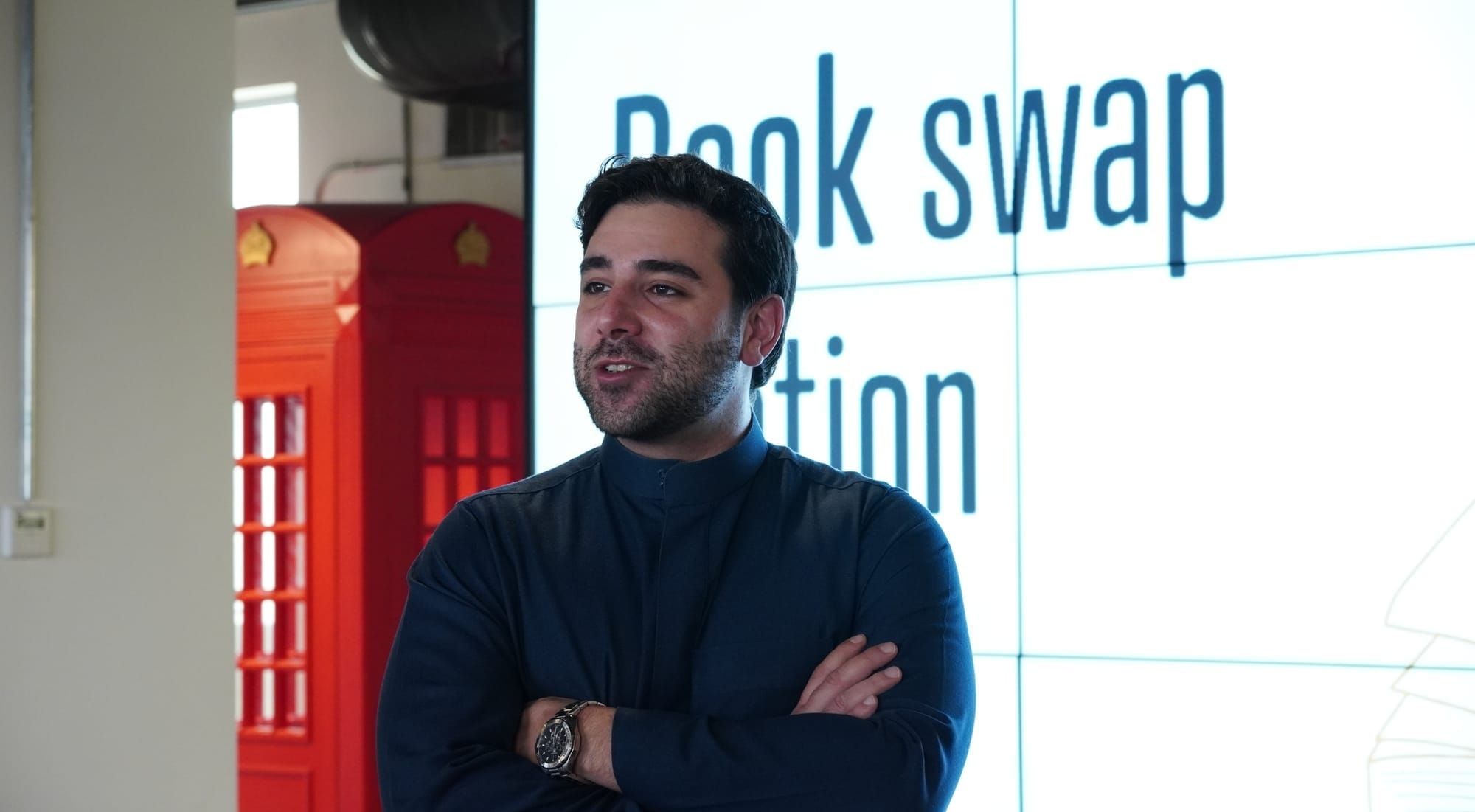
Khalid Al-Khalidi, a captivating speaker, enthralled a room full of creatives, unveiling the intricate layers of culture they had unknowingly embraced throughout their lives.
At CreativeMornings Riyadh’s April gathering, Al Jalees joined as a partner for a session that refused to treat culture as a concept. Under the theme “Ember,” musician, producer, and creative community builder Khalid Al-Khalidi made the case for culture as something far more fundamental than an invisible system, quietly sustaining everything we build.
He opened with the metaphor that would anchor the entire talk. "An ember is not the fire. It is what ensures the next fire is possible." Culture, he argued, works the same way. It is the underlying force that sustains cycles across work, creativity, products, and communities. Not declared and designed but practiced.
Culture Is Not What You Say. It’s What You Repeat.
Al-Khalidi was clear about what culture is not. He emphasized that while strategy is important, it is ineffective without ongoing attention, much like an idea left open on a tab—never completed, never realized. He continually returned to one word: stewardship. Not leadership, not management. Stewardship holds something the others lack—the sense of long-term care, of nurturing an idea as it matures. It speaks to how, when carefully tended, an idea can evolve into a meaningful value that people embrace and carry into the future.
“Culture is mostly something that you feel. You walk into something, and then slowly, you define it. But what it is—is the repeated acts that establish how things are. That is why we call it the invisible system.”
Culture is not measured. No one will come and tell you that you have built an excellent work culture. But within whatever you do, recognizing that invisible force is essential because that is where the real power lies, in any organization, or in any individual.
We Are Not Selling Boxes
Al-Khalidi grounded the talk in lived experience. His first real encounter with culture at work came through the family business, where he was responsible for the sound division until his father reframed the work entirely.
“We are not selling boxes. What we sell is sound culture.”
This was before 2019, when live entertainment transformed the Saudi landscape. Instead of investing in marketing, the team focused on educating and building understanding with their clients. They provided them with the knowledge to recognize and utilize their products effectively. Loyalty was not built towards a brand, but rather towards a shared understanding. This shift from transactional relationships to genuine connections became a guiding principle for Al-Khalidi in all subsequent projects.
Not Just Teaching. Building an Ecosystem.
When he joined the music education company, the goal was never simply to teach. It was to build an ecosystem — one that interconnected music education, training, faculty, and students into a cohesive whole.
“The reason people were invested in excelling was not monetary, and not KPIs. It was because we genuinely cared about the level of the programs we were running. Every person in the project saw not only the value they were contributing but how they could add value.”
In two years, student numbers and revenue both increased by more than 200% thanks to the team’s ability to care for students and demonstrate their trustworthiness. When challenges arose, the team embraced accountability, openly repaired any issues, and continued moving forward as a cohesive unit. This consistent accountability became an integral part of their culture.
The same principle held during COVID. In 2020, his team connected 30 artists across 30 different parts of the world, six of them in Saudi Arabia at a time when everything felt fragmented and distant. What made it possible was not logistics. It was a shared sense of purpose.
The Anatomy of the Invisible System
“It’s the consistent inconsistencies,” he said.
There hasn’t been a single catastrophic breakdown. Systems erode gradually through the accumulation of small gaps. These gaps occur when important information isn’t heard, changes aren’t implemented, and follow-up on results isn’t done. This creates gaps between departments, functions, and stakeholders. Once trust becomes fragile, repair is still possible. However, once a certain point is crossed, the entire cycle must restart.
“We all have off days. No one is perfect. It is not about the one off day. It is about the number of times you show up not caring. That is where things start to fall apart.”
Culture shows up in preparation, consistency, follow-up, and feedback. Trust is its most important outcome and it is not built through perfection but through repair.
The Ship Must Have Rhythm
Al-Khalidi asked the room to think of culture as rhythm and as flow. He pictured the work as a ship: the duty is to take it from the port, let it sail, find whatever adventures await, and come back again. Without sustained rhythm, the ship stalls. Or sinks.
Culture extends across products, organizations, and communities. A product’s longevity is not determined at launch — it is determined by the culture that surrounds it over time. On leading creative teams, he was candid: these people live in their feelings. He chose to transform vulnerability into strength, protecting experimentation above all else even short-lived experimentation with no fixed end goal. Because creative people need to practice ideas.
Five Steps. One Cycle.
Al-Khalidi closed with a framework:
1- Listen — pay close attention to one part of your day and create feedback.
2- Ritualize — turn what you hear into a daily habit.
3- Standardize — put it in a form you can return to consistently.
4- Repair — when things go wrong, take accountability openly.
5- Renew — complete the cycle, and the habit becomes culture.
His closing invitation was simple. For the next 30 days, select one loop in your life or work, define it, and choose one ritual within it. Track, make adjustments, and improve.
“May we become better at noticing the ember — and better at tending the cultures that carry us forward.”
Through its partnership with CreativeMornings Riyadh, Al Jalees continues to foster conversations that move beyond mere ideas and into practical applications, thereby ensuring that creativity is not only sparked, but sustained.
Written by Salma
Edited by Rana