
East of Eden: A Story of Good, Evil, and the Choices in Between
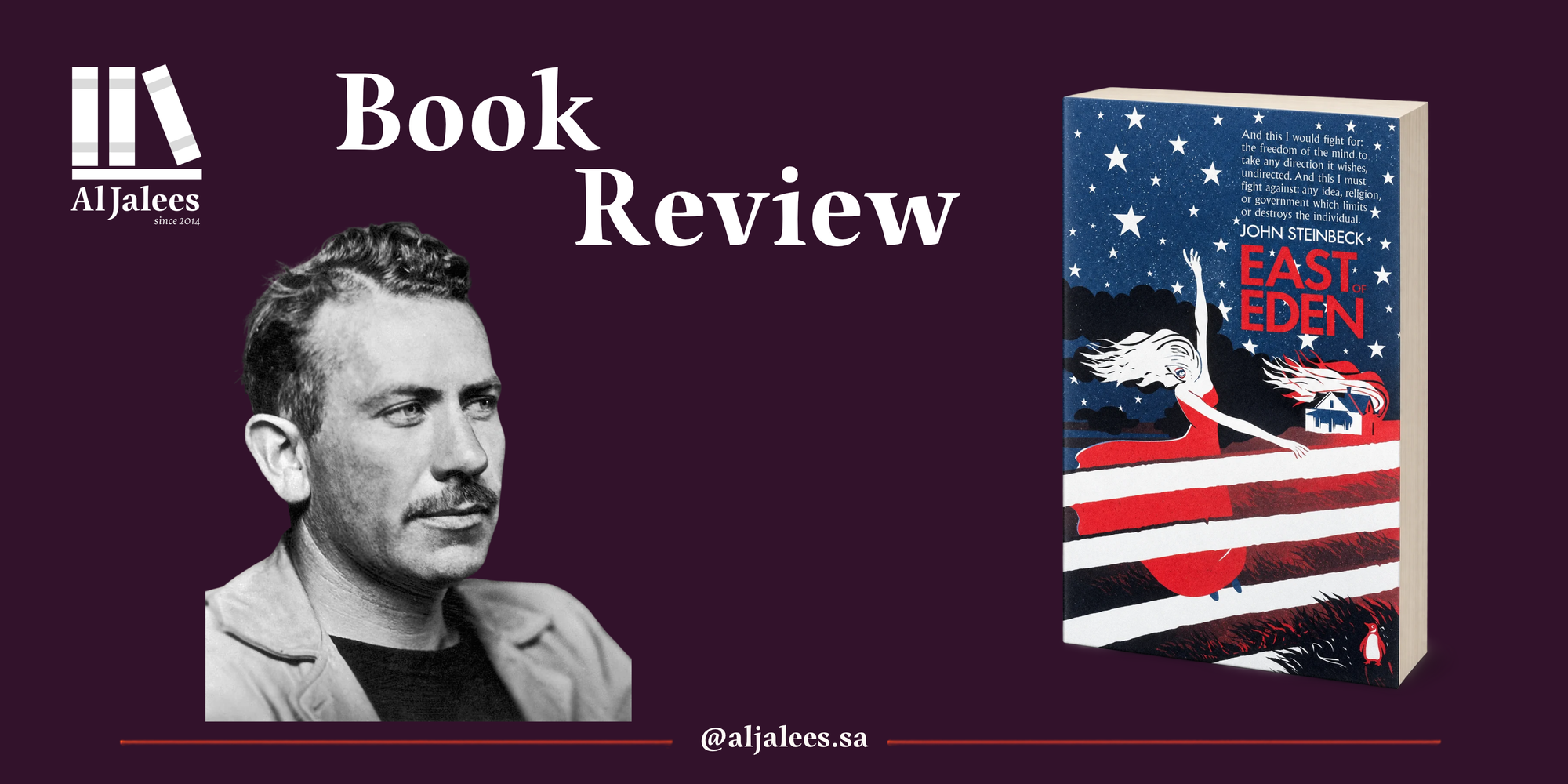
East of Eden: Are We Destined to Repeat the Past?
Featured Literary Circle Book of the Month — Al Jalees Culture Club
Can we escape the mistakes of the generations before us? Are we inherently bound to mirror our families, our circumstances, and our past, or do we have the freedom to decide who we become?
These are some of the questions explored in John Steinbeck's East of Eden, a profound literary work that examines human nature, familial relationships, and the fine line between good and evil.
Published in 1952, the novel is set primarily in California's Salinas Valley, a place deeply personal to Steinbeck himself. Spanning three generations, the story follows the intertwined lives of the Hamilton and Trask families. Although their backgrounds differ considerably, both families become part of a larger exploration of jealousy, love, virtue, and the choices that shape human lives.
A Family Divided
At the heart of the narrative is the Trask family, whose complicated relationships reflect the struggle between good and evil.
Adam Trask is an idealistic man whose desire to see goodness in others often prevents him from recognizing their true nature. His wife, Cathy Ames, stands in sharp contrast. Manipulative, calculating, and seemingly indifferent to the suffering she causes, Cathy is one of the novel's most unsettling characters. Through her, Steinbeck challenges readers to consider whether evil is inherent in human nature or shaped by individual choices.
Their twin sons, Caleb (Cal) and Aron, grow up with opposing personalities. Aron appears innocent and virtuous, while Cal struggles with jealousy, guilt, and the fear that he has inherited his mother's darker qualities. Their relationship becomes one of the novel's central conflicts, echoing the biblical story of Cain and Abel, in which envy and rivalry lead to devastating consequences.
Yet this conflict is not unique to the twins. Adam and his brother Charles experience a similarly troubled relationship, marked by competition, resentment, and a longing for their father's approval. The repetition of these patterns across generations raises one of Steinbeck's most compelling questions: are we destined to repeat the mistakes of those who came before us?
Alongside the Trasks are the Hamiltons, particularly Samuel Hamilton, a perceptive and compassionate man whose wisdom offers an alternative perspective on human relationships. His warmth and curiosity provide a contrast to the emotional struggles within the Trask family.
Another significant character is Lee, Adam's Chinese American servant, who becomes a trusted friend, caregiver, and philosophical voice within the household. His reflections on morality and human freedom are essential to understanding the novel's central message.
Together, these characters represent different aspects of human nature. Their virtues, flaws, desires, and contradictions allow Steinbeck to explore morality not as a simple division between good and evil, but as a continuous struggle within individuals.

The Fine Line Between Good and Evil
Beneath Steinbeck's enthralling narrative lies an insightful examination of morality.
Rather than portraying characters as entirely righteous or completely corrupt, Steinbeck explores the ways people are shaped by their desires, experiences, and actions. Even those who strive to be good are capable of causing harm, while those who struggle with darker impulses may still possess the capacity for kindness and transformation.
Cal embodies this conflict particularly well. His fear of resembling his mother creates an internal struggle between the person he believes himself to be and the person he wishes to become. Through Cal, Steinbeck suggests that recognising our flaws does not necessarily mean surrendering to them.
The novel invites readers to look beyond people's actions and consider the motivations behind them. Jealousy may conceal a longing for love, resentment may grow from rejection, and even seemingly virtuous behaviour can emerge from complicated desires.
Steinbeck's characters are compelling precisely because they are imperfect. Their moral struggles resemble our own, making the distinction between good and evil less straightforward than we might initially believe.
Timshel: The Freedom to Choose
One of the novel's most important themes is the influence of family and the possibility of breaking generational cycles.
Throughout the story, the Trasks repeatedly confront jealousy, resentment, and the need for parental approval. These conflicts seem to pass from one generation to another, raising the question of whether people are inevitably shaped by their inherited circumstances.
This idea is explored through timshel, a Hebrew word interpreted within the novel as "thou mayest."
The concept represents the freedom to choose between good and evil. Rather than suggesting that human beings are destined to behave according to their nature or upbringing, Steinbeck presents the possibility of transformation.
Our past may influence us, but it does not necessarily determine our future.
Through timshel, Steinbeck shifts the novel's philosophical focus from fate to responsibility. If we possess the freedom to choose, then we also carry responsibility for the people we become.
This idea gives East of Eden much of its lasting significance. It suggests that even when we inherit difficult circumstances, painful relationships, or destructive patterns, we may still choose a different path.
From Page to Screen
The enduring appeal of East of Eden extends beyond literature, inspiring several screen adaptations across generations.
In 1955, director Elia Kazan brought part of the novel to the cinema, with James Dean portraying Cal Trask. The film concentrates primarily on the later events of the story, particularly the troubled relationship between Cal, Aron, and their father.
A more extensive television adaptation followed in 1981, presenting the family saga as a miniseries starring Jane Seymour.
Most recently, Netflix released a seven-episode limited series on October 1, 2026, written by Zoe Kazan and starring Florence Pugh as Cathy Ames. This adaptation brings renewed attention to Cathy's character and the complex relationships at the heart of Steinbeck's novel.
Each adaptation offers a different interpretation of the story, demonstrating how its themes of family, morality, and individual choice continue to resonate with audiences.
A Novel That Continues to Challenge Us
East of Eden is undoubtedly a literary masterpiece. Its extensive character development, philosophical discussions, and multigenerational narrative may challenge readers who prefer fast-paced storytelling. However, Steinbeck's exploration of human nature gives the novel an emotional and intellectual depth that makes the journey worthwhile.
The characters are not merely figures in a family saga. They represent the contradictions that exist within all of us: the desire to be loved, the fear of rejection, the temptation to repeat familiar patterns, and the hope that we can become something different.
Ultimately, East of Eden is more than a story about two families or a battle between good and evil. It is a reflection on the choices that make us who we are.
Through biblical parallels and deeply human struggles, Steinbeck leaves readers with a profound idea: we may not choose our circumstances or our histories, but we retain the capacity to choose who we become.
And perhaps that is what makes East of Eden so enduring. It reminds us that our past may shape the beginning of our story, but it does not have to determine its ending.